Day: December 26, 2024
Russian authorities and Crimean occupation officials plan to hold a televised event to mark the anniversary of the Yalta Conference. During the broadcast, they intend to promote narratives about alleged Nazism in Ukraine and the obsolescence of the global order, reports the National Resistance Center of Ukraine (NRC).
The Kremlin reportedly aims to use the 80th anniversary of the end of World War II to reinforce its self-proclaimed role as a “fighter against Nazism.” Moscow plans to exploit historical themes to justify its aggression.
To achieve this, Russia intends to engage its global agents of influence. Their participation in such events is meant to portray Russia as the primary defender against Nazism. In this narrative, the “current fascist Russia” claims it can unilaterally determine who qualifies as a Nazi worldwide. This purportedly gives Moscow the right to invade sovereign states.
The NRC noted that the broadcast commemorating the Yalta Conference is scheduled for February 2025. It will connect studios in Simferopol with studios in the United Kingdom, France, and the United States.
The NRC indicated that during the event, Russian authorities planned to spread narratives about Nazism in Ukraine and the outdated nature of the modern global order. It also noted that the enemy was currently seeking Western partners to participate in this charade.
Additionally, Russia’s attempts to promote this agenda internationally would fail. It described modern Russia as the primary threat to global security.
Yalta conference
The Yalta (Crimean) Conference of Allied Powers occurred from February 4 to 11, 1945. It was the second major meeting of the leaders of the anti-Hitler coalition —the Soviet Union, the United States, and the United Kingdom — during World War II. The conference focused on establishing the post-war global order.
The meeting occurred at the Livadia (White) Palace in the village of Livadia, located three kilometers from Yalta. It was the last summit of the “Big Three” leaders of the anti-Hitler coalition during the pre-nuclear era.
The key decisions of the conference addressed two main issues:
First, the state borders were redrawn in territories recently occupied by the Third Reich. Informal but universally recognized demarcation lines were to be established between the spheres of influence of the Allied powers, a process initiated at the Tehran Conference in 1943.
Second, the Allies recognized that, with the disappearance of their common enemy, the temporary alliance between the West and the Soviet Union would lose its purpose. As a result, they sought to establish procedures to ensure the permanence of the demarcation lines drawn on the world map.
The so-called Declaration on Liberated Europe, adopted during the Yalta Conference, gave the Soviet Union significant leeway to interpret assistance to liberated nations. This enabled the USSR to secure political control over its occupied countries, leading to the Sovietization of Eastern and Central Europe and ultimately causing the Cold War.
The situation in temporarily occupied territories
Russian forces continue to engage in anti-social and terrorist activities in Ukraine’s temporarily occupied territories.
For instance, workers at the Berdyansk seaport have not received wages for several months.
In temporarily occupied Melitopol, Russian authorities are preparing to confiscate Ukrainian citizens’ homes over unpaid utility bills.
Additionally, the enemy is recruiting children from orphanages to join the Russian army.
Russian authorities and Crimean occupation officials plan to hold a televised event to mark the anniversary of the Yalta Conference. During the broadcast, they intend to promote narratives about alleged Nazism in Ukraine and the obsolescence of the global order, reports the National Resistance Center of Ukraine (NRC).
The Kremlin reportedly aims to use the 80th anniversary of the end of World War II to reinforce its self-proclaimed role as a “fighter against Nazism.” Moscow plans to exploit historical themes to justify its aggression.
To achieve this, Russia intends to engage its global agents of influence. Their participation in such events is meant to portray Russia as the primary defender against Nazism. In this narrative, the “current fascist Russia” claims it can unilaterally determine who qualifies as a Nazi worldwide. This purportedly gives Moscow the right to invade sovereign states.
The NRC noted that the broadcast commemorating the Yalta Conference is scheduled for February 2025. It will connect studios in Simferopol with studios in the United Kingdom, France, and the United States.
The NRC indicated that during the event, Russian authorities planned to spread narratives about Nazism in Ukraine and the outdated nature of the modern global order. It also noted that the enemy was currently seeking Western partners to participate in this charade.
Additionally, Russia’s attempts to promote this agenda internationally would fail. It described modern Russia as the primary threat to global security.
Yalta conference
The Yalta (Crimean) Conference of Allied Powers occurred from February 4 to 11, 1945. It was the second major meeting of the leaders of the anti-Hitler coalition —the Soviet Union, the United States, and the United Kingdom — during World War II. The conference focused on establishing the post-war global order.
The meeting occurred at the Livadia (White) Palace in the village of Livadia, located three kilometers from Yalta. It was the last summit of the “Big Three” leaders of the anti-Hitler coalition during the pre-nuclear era.
The key decisions of the conference addressed two main issues:
First, the state borders were redrawn in territories recently occupied by the Third Reich. Informal but universally recognized demarcation lines were to be established between the spheres of influence of the Allied powers, a process initiated at the Tehran Conference in 1943.
Second, the Allies recognized that, with the disappearance of their common enemy, the temporary alliance between the West and the Soviet Union would lose its purpose. As a result, they sought to establish procedures to ensure the permanence of the demarcation lines drawn on the world map.
The so-called Declaration on Liberated Europe, adopted during the Yalta Conference, gave the Soviet Union significant leeway to interpret assistance to liberated nations. This enabled the USSR to secure political control over its occupied countries, leading to the Sovietization of Eastern and Central Europe and ultimately causing the Cold War.
The situation in temporarily occupied territories
Russian forces continue to engage in anti-social and terrorist activities in Ukraine’s temporarily occupied territories.
For instance, workers at the Berdyansk seaport have not received wages for several months.
In temporarily occupied Melitopol, Russian authorities are preparing to confiscate Ukrainian citizens’ homes over unpaid utility bills.
Additionally, the enemy is recruiting children from orphanages to join the Russian army.
Security forces of Syria’s transitional administration have launched an operation in the coastal province of Tartus to neutralize threats from groups loyal to the ousted President Bashar al-Assad. The operation follows the recent killing of 14 police in the region, according to Reuters and SANA.
According to Western media, on Thursday, the new Syrian government began implementing strict security measures in the Tartus area.
This move is in response to an attack on Ministry of Interior personnel. The Syrian government blames remnants of Assad’s regime and vows to pursue them. The attack, which occurred on December 26, resulted in the deaths of 14 law enforcement officers and left 10 others injured. The new government has described the attack on the police as an ambush.
Syrian state media reported the deployment of military operations department personnel to the village of Ma’arat al-Mu’azza in rural Tartus “to restore security and stability.”
According to SANA, the operation in Tartus is also aimed at “pursuing remnants of Assad’s forces in the forests and hills.”
Preventing the threat of interfaith conflicts in Syria
The recent incident of violence in the province of Tartus, home to many members of the Shia Alawite sect (to which Assad belongs), has become the most serious challenge for Syria’s new government, led by Sunni Islamists, since the removal of President Assad from power on December 8.
“Members of the Alawite minority, an offshoot of Shi’ite Islam, wielded huge sway in Assad-led Syria, dominating security forces he used against his opponents during the 13-year-long civil war, and to crush dissent during decades of bloody oppression by his police state,” Reuters notes.
Damascus authorities have also warned about attempts to provoke interfaith conflict.
Additionally, leaders of the rebel forces that ousted Assad, including representatives of the Islamist group Hayat Tahrir al-Sham, have repeatedly pledged to protect minority groups who fear that the new government may attempt to impose an Islamist regime.
On December 26, Syrian state media reported that the governor of Latakia, Mohammed Othman, met with prominent figures and Alawite sect sheikhs to “encourage community cohesion and civil peace.”
Furthermore, Syria’s Ministry of Information confirmed it is preventing the spread and publication of “any media content or news with a sectarian tone aimed at spreading division.”
Earlier reports indicated that Syria’s transitional government had reached an agreement with rebel groups to disband them. The groups are to be united under one organization under the Ministry of Defense. However, according to media reports, the Kurdish Syrian Democratic Forces group, supported by the United States, did not join the agreement.
On December 11, Syria’s new government assured it would protect all minority groups. Syrian refugees have been urged to return home.
Security forces of Syria’s transitional administration have launched an operation in the coastal province of Tartus to neutralize threats from groups loyal to the ousted President Bashar al-Assad. The operation follows the recent killing of 14 police in the region, according to Reuters and SANA.
According to Western media, on Thursday, the new Syrian government began implementing strict security measures in the Tartus area.
This move is in response to an attack on Ministry of Interior personnel. The Syrian government blames remnants of Assad’s regime and vows to pursue them. The attack, which occurred on December 26, resulted in the deaths of 14 law enforcement officers and left 10 others injured. The new government has described the attack on the police as an ambush.
Syrian state media reported the deployment of military operations department personnel to the village of Ma’arat al-Mu’azza in rural Tartus “to restore security and stability.”
According to SANA, the operation in Tartus is also aimed at “pursuing remnants of Assad’s forces in the forests and hills.”
Preventing the threat of interfaith conflicts in Syria
The recent incident of violence in the province of Tartus, home to many members of the Shia Alawite sect (to which Assad belongs), has become the most serious challenge for Syria’s new government, led by Sunni Islamists, since the removal of President Assad from power on December 8.
“Members of the Alawite minority, an offshoot of Shi’ite Islam, wielded huge sway in Assad-led Syria, dominating security forces he used against his opponents during the 13-year-long civil war, and to crush dissent during decades of bloody oppression by his police state,” Reuters notes.
Damascus authorities have also warned about attempts to provoke interfaith conflict.
Additionally, leaders of the rebel forces that ousted Assad, including representatives of the Islamist group Hayat Tahrir al-Sham, have repeatedly pledged to protect minority groups who fear that the new government may attempt to impose an Islamist regime.
On December 26, Syrian state media reported that the governor of Latakia, Mohammed Othman, met with prominent figures and Alawite sect sheikhs to “encourage community cohesion and civil peace.”
Furthermore, Syria’s Ministry of Information confirmed it is preventing the spread and publication of “any media content or news with a sectarian tone aimed at spreading division.”
Earlier reports indicated that Syria’s transitional government had reached an agreement with rebel groups to disband them. The groups are to be united under one organization under the Ministry of Defense. However, according to media reports, the Kurdish Syrian Democratic Forces group, supported by the United States, did not join the agreement.
On December 11, Syria’s new government assured it would protect all minority groups. Syrian refugees have been urged to return home.
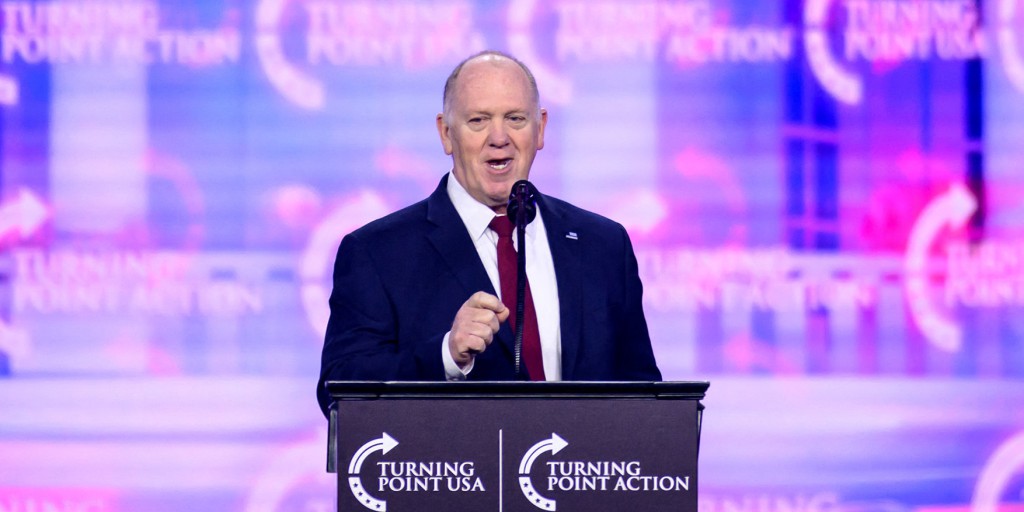
Tom Homan, whom President-elect Donald Trump has chosen to oversee immigration and border security, said using detention centers for migrant families is still being discussed.
The post Trump’s ‘border czar’ says family detention centers could play a role in deportation effort first appeared on FBI Reform – fbireform.com.
On Friday, December 27, the Constitutional Court of South Korea will hold a session to review the impeachment case of the suspended President Yoon Suk Yeol. The case stems from his declaration of martial law in early December, reports Reuters.
Yoon Suk Yeol’s legal representatives will attend the first session of the Constitutional Court on Friday, December 27, where the impeachment case related to his temporary declaration of martial law will be reviewed by parliament. Yoon’s adviser provided this information to the agency.
According to attorney Seok Dong-hyeon, two lawyers from Yoon’s team are expected to be present at the court hearing. One is a former prosecutor, while the other is a former spokesperson for the Constitutional Court.
The court has 180 days to decide whether to reinstate Yoon as president or remove him from office. In the latter case, new presidential elections will be held within 60 days. Yoon is not required to attend the hearings.
Until Thursday, Yoon had ignored the court’s requests for documents and summons from investigators in a separate criminal case regarding his declaration of martial law on December 3. This prompted criticism even from some members of his own party.
Martial law and political crisis
Yoon Suk Yeol’s unexpected declaration of martial law on December 3 and its rapid political repercussions shocked the country and financial markets. The United States and European countries expressed concern, as they had viewed Yoon as a reliable partner in global efforts to counter China, Russia, and North Korea.
The crisis deepened this week when the opposition Democratic Party promised to move forward with an impeachment motion against Prime Minister Han Duck-soo, who is currently acting as president. This came in response to his rejection of a call to immediately appoint three judges to the Constitutional Court to fill vacant positions.
The parliamentary session is scheduled for the afternoon of Friday, December 27. The Democratic Party announced that it would bring the impeachment motion against Han to a vote.
The party has clashed with Han, the prime minister appointed by Yoon, over judicial appointments and proposed bills calling for special prosecutors to investigate the president’s activities.
On Thursday, December 26, Han stated that appointing judges without bipartisan agreement exceeds his authority as interim president.
The parliamentary vote, which will determine Han’s fate, is set to take place around the same time the Constitutional Court holds its first hearing in the case that will decide whether Yoon will be reinstated as president or permanently removed from office.
On Friday, December 27, the Constitutional Court of South Korea will hold a session to review the impeachment case of the suspended President Yoon Suk Yeol. The case stems from his declaration of martial law in early December, reports Reuters.
Yoon Suk Yeol’s legal representatives will attend the first session of the Constitutional Court on Friday, December 27, where the impeachment case related to his temporary declaration of martial law will be reviewed by parliament. Yoon’s adviser provided this information to the agency.
According to attorney Seok Dong-hyeon, two lawyers from Yoon’s team are expected to be present at the court hearing. One is a former prosecutor, while the other is a former spokesperson for the Constitutional Court.
The court has 180 days to decide whether to reinstate Yoon as president or remove him from office. In the latter case, new presidential elections will be held within 60 days. Yoon is not required to attend the hearings.
Until Thursday, Yoon had ignored the court’s requests for documents and summons from investigators in a separate criminal case regarding his declaration of martial law on December 3. This prompted criticism even from some members of his own party.
Martial law and political crisis
Yoon Suk Yeol’s unexpected declaration of martial law on December 3 and its rapid political repercussions shocked the country and financial markets. The United States and European countries expressed concern, as they had viewed Yoon as a reliable partner in global efforts to counter China, Russia, and North Korea.
The crisis deepened this week when the opposition Democratic Party promised to move forward with an impeachment motion against Prime Minister Han Duck-soo, who is currently acting as president. This came in response to his rejection of a call to immediately appoint three judges to the Constitutional Court to fill vacant positions.
The parliamentary session is scheduled for the afternoon of Friday, December 27. The Democratic Party announced that it would bring the impeachment motion against Han to a vote.
The party has clashed with Han, the prime minister appointed by Yoon, over judicial appointments and proposed bills calling for special prosecutors to investigate the president’s activities.
On Thursday, December 26, Han stated that appointing judges without bipartisan agreement exceeds his authority as interim president.
The parliamentary vote, which will determine Han’s fate, is set to take place around the same time the Constitutional Court holds its first hearing in the case that will decide whether Yoon will be reinstated as president or permanently removed from office.
Donald Trump, elected president of the United States, appointed Miami-Dade County Commissioner Kevin Marino Cabrera as ambassador to Panama. The decision came amid US intentions to restore control over the Panama Canal, which had been lost 25 years ago, reports Reuters.
Trump described Cabrera as a “fierce fighter for America First principles,” who, according to him, played a key role in driving economic growth and strengthening international partnerships.
“Few understand Latin American politics as well as Kevin – He will do a FANTASTIC job representing our Nation’s interests in Panama!” Trump wrote in a post on Truth Social.
History of the Panama Canal
The Panama Canal is a waterway connecting the Pacific Ocean’s Panama Gulf to the Caribbean Sea and the Atlantic Ocean. It is located on the Panama Isthmus within Panama.
The 1898 Spanish-American War reinforced the US desire to build a canal across the Panama Isthmus to enhance its influence in the Western Hemisphere.
On January 22, 1903, Colombian Ambassador Tomás Herrán and U.S. Secretary of State John Hay signed a treaty granting the U.S. a 100-year lease for a strip of land to construct the Panama Canal.
The US Department of Defense began construction of the canal in 1904. The project was carried out under the supervision of the American Defense Department, and Panama essentially became a US protectorate. The canal was completed after 10 years, costing $400 million and involving 70,000 workers.
The United States controlled the Panama Canal until December 31, 1999, after which it was handed over to Panama under its government’s control.
Trump’s statements on the Panama Canal
On December 22, 2024, Donald Trump announced plans to regain US control over the Panama Canal.
He stated that Panama, which has maintained diplomatic relations with the US since 1903, is robbing us at the Panama Canal in ways they could never imagine.
Trump accused Chinese soldiers of illegally exploiting the canal and pointed out that “the United States puts in Billions of Dollars in ‘repair’ money.”
Panama’s President José Raúl Mulino stated that China has no influence over the administration of the canal and emphasized that there are no Chinese soldiers at the canal.
China does not control or manage the canal. However, a subsidiary of Hong Kong’s CK Hutchison Holdings has long managed two ports located at the Caribbean and Pacific entrances to the canal.
Read more about what Trump said about Greenland and the Panama Canal in our analytical material.